Third Culture Musings
We do a lot of work with the kids at school about what it means to be a third-culture kid (TCK). The students we teach at the international school come from such a wide range of backgrounds: both parents from the same country, but not the country they currently call home; parents from different countries and neither from the country they currently call home; one parent from here and another from elsewhere... the list goes on. Yet they all have such a lot in common, stemming from this idea that they are all 'third-culture kids': not fully at home in the country where their parents were born and grew up (perhaps they haven't lived there themselves but merely pass through for family holidays) and not fully at home in the country they currently live. They are part of a third-culture. A nomadic tribe of privileged, ambitious, worldly youngsters with many places (or no place?) to call home.
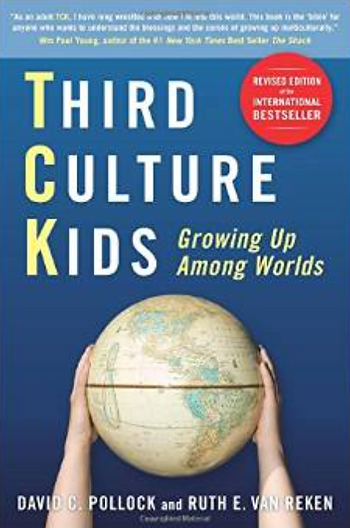
I was lucky enough to hear Ruth Van Reken speak at the ELMLE conference last year in Berlin. Having grown up a TCK herself and raised her own children this way too, she published a great book on the topic back in 1999. She is shocked that, since then, there hasn't been too much else published on TCKs despite more and more of the world's children growing up in this way.
For so many, this really isn't too shocking, since, these children truly are still in the minority. Why should educational research focus on such a minute bubble of wealth and inevitable success? I tend to agree but I too now live in this bubble and - having lived apart from the culture I was born into for so long now - I suppose I'm considered a third-culture adult myself. Questions about this lifestyle thus arise all the time for me.
"Third Culture Kids are described as typically highly-skilled both interpersonally and interculturally, flexible, adaptable, empathic and high achievers academically. At the same time they typically suffer from rootlessness, unresolved grief, insecurity and a difficulty in relating to settled individuals and communities in the ‘home’ culture."
Having grown up in the same town for the first 18 years of my life (the same town as both my parents and all four grandparents), as a child I was on the opposite end of the spectrum, as far away from being a third-culture kids as it is possible to be. Yet, having chosen to leave my home town, my famly and the culture I grew up in by working abroad from the age of 18, I now recognise many of these qualities in myself and acknowledge that I am a third-culture adult. Or a 'Wanderluster'... Speaking of which, there's apparently a genetic reason for people like this, who just can't sit still and stay in one place.
I find more and more now that I seek the company of people with the same 'culture' as me. I constantly question whether it is possible to find a balance between this 'rootlessness' and the constant quest to feel at home somewhere. The problem for us is that we constantly want to move on... Right now, I am packing up my life here in Denmark with the intention to have a year of adventure in Greece, Bali, Australia and who knows elsewhere before settling in another place who knows elsewhere in 2016 for who knows how long...
How can I possibly hope to find peace, calm, solace and long-term companionship if I am constantly on the move? But, is the answer to stay still, then? To just remain in one place and pretend I fit in like a local? I know so well that I can't do that. I've lived in Denmark for four and a half years now and while I absolutely LOVE so many things about the lifestyle here, I know that spending another winter here as a single woman living on her own would not be good for me. Here in Denmark, much of it is a language thing but, as described by Heyward, I have found a 'difficulty in relating to settled individuals and communities' not only here, but even back 'home' in the UK.
It's time to move on but... when will it ever be time to settle?
Comments